In this post, I describe a solution to the DMCommunity May 2025 Challenge and briefly analyze different approaches to rules with exceptions and conflicts.
Continue readingCategory Business Rules
Resolving Conflicts among Business Rules
Ron Ross again brought up the question of “Exceptions to Business Rules”. Ron defines an exception to the rules as a foreseen, explicit set of circumstances in which different-than-normal guidance is to be followed. He gave an example: seeing-eye dogs as an (explicit) exception to dogs not being allowed in a hospital. One comment says: “I heard that there are no exceptions to the BRs. I heard that there are only other BRs.”
This discussion is still as important as it was years ago when we, vendors of Business Rules systems, considered it as a more generic problem of Resolving Conflicts among Business Rules.
Discovering Rules From Examples

Watch this short Richard Feynman’s video about Discovering Rules of Chess. He used a chess analogy to explain what we are doing in trying to understand nature: “Imagine that the gods are playing some great game like chess. You don’t know the rules of the game, but you are allowed to look at the board at least from time to time from a little corner, perhaps. And from these observations, you try to figure out what the rules of the game are, what are the rules of pieces moving.”
After watching this video, I decided it could be interesting today to refresh several past projects devoted to the Automatic Rules Discovery based on positive and negative examples. I will describe a few projects in which I and/or some of my colleagues were involved.
Continue readingSorting Collections of Objects in OpenRules

We added more user-friendly sorting capabilities to the Release 10.1.0 of OpenRules. There are no need to use Java to define objects in the array of list of business objects that should be sorted inside a decision model. Let’s consider a simple example of sorting the array of “Passengers” using their frequent flier status and a number of miles.
Continue readingSolutions for Challenge “Soldier Payment Rules”
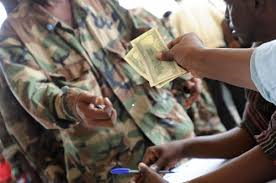
The DMCommunity’s Aug-2023 Challenge brought serious discussions at LinkedIn about the integrated use of SQL and Rule Engines. Instead of making generic statements about which technology is better, I prefer to answer this question for a concrete problem. My colleague Alex Mirtsyn has already provided a pure rules-based solution. As I was asked to provide a solution with OpenRules RuleDB, I extended Alex’s solution with access to a relational database directly from business rules. I will describe the resulting decision model in this post.
Continue readingSanity Checkers for AI-based Decisions
“When it comes to AI, expecting perfection is not only unrealistic, it’s dangerous.
Responsible practitioners of machine learning and AI always make sure
that there’s a plan in place in case the system produces the wrong output.
It’s a must-have AI safety net that checks the output,
filters it, and determines what to do with it.”
Cassie Kozyrkov, Chief Decision Scientist, Google
“When we attempt to automate complex tasks and build complex systems, we should expect imperfect performance. This is true for traditional complex systems and it’s even more painfully true for AI systems,” – wrote Cassie Kozyrkov. “A good reminder for all spheres in life is to expect mistakes whenever a task is difficult, complicated, or taking place at scale. Humans make mistakes and so do machines.”
Like many practitioners who applied different decision intelligence technologies to real-world applications, I can confirm the importance of this statement. I also can share how we dealt with the validation of automatically made decisions in different complex decision-making applications.
Continue readingComposite Decision Variables

In real-world decision models, you may want to write business rules that refer to combinations of two or more individual decision variables called composite decision variables. For example, your business concept “Department” may have a decision variable “Manager” of the type “Employee” which is another business concept with such variables as “Name”, “Salary”, “Gender”, etc.
Continue readingBusiness Rules and SQL: Competitors or Partners?

IEEE Spectrum just published the article “The Rise of SQL” about the recent SQL’s comeback caused not only by the ever-increasing use of databases, but also by the use of SQL within the fields of data science, machine learning, big data, and streaming systems. While traditionally, Business Rule Engines did not communicate with databases directly, our customers frequently prefer to use SQL-like business rules to access their data when it is necessary following their business logic. At the same time, they want to preserve the power of SQL dealing with databases of any complexity. Two years ago OpenRules introduced a special product “Rule DB” that does exactly this by empowering Excel-based business rules with a run-time RDBMS communication mechanism. In this post we will explain how to migrate an SQL query to OpenRules.
Continue readingOpenRules Debuggers
 OpenRules Decision Manager provides two Decision Model Debuggers:
- Graphical Debugger included in OpenRules Explorer
- Command Line Debugger described in this post.
While the graphical debugger is the most user friendly debugger, it is currently available only under Windows and Linux. The Command Line Debugger is available under Windows, Mac, and Linux. Continue reading
Where is Gold?
In this post I describe an OpenRules solution to the puzzle offered as DMCommunity.org June-2021 Challenge:
Continue readingRules-based Machine Learning

The integrated use of Rule Engine and Machine Learning (ML) products becomes more and more popular. OpenRules Rule Learner is a good example of such integration. While there are plenty of powerful Machine Learning algorithms available off-the-shelf, it can be quite practical to use rules-based machine learning instead. The classical rules-based technology may address learning problems considering historical and constantly changing operational data. In such situations a “Rule Engine” plays a role of a “Rule Learner”. Here is a good example.
Continue readingPartnership with ProcessMaker
 Today ProcessMaker and OpenRules announced a new partnership that provides our customers with an integrated business process and decision management solution. The partnership adds high performance decision services created in OpenRules and deployed as AWS Lambdas to business applications built with ProcessMaker. It unlocks a powerful new level of sophistication for process, workflow, and business rules designers around the globe. This webinar demonstrates an implementation of a loan origination process in ProcessMaker that utilizes complex decision services built in OpenRules. Read Press Release.
RuleDB.com – Accessing Database from Business Rules
Traditionally, Business Rule Engines do not communicate with databases directly and expect to receive input and provide output via intermediate objects defined in Java, JSON, or XML. However, our customers frequently prefer to use business-friendly rules defined in Excel instead of separately defined SQL statements. Our new product “Rule DB” does exactly this. In this post I will describe how it works using the MySQL Sample Database. Continue reading
Compressing Decision Tables
 The DMC Challenge Sep-2020 deals with compression of decision tables trying to replace relatively large decision tables with “almost” equivalent but smaller decision tables. It is only natural to apply Machine Learning to this problem as it allows us to automatically discover business rules from the sets of labeled historical data records. So, I decided to use the open source Rule Learner to address this problem. In this post I will describe how I approached this problem with these implementation steps:
- Write a simple generator of data instances with various combinations of known attributes
- Run the existing decision table using OpenRules to produce labeled instances
- Feed the labeled instances to Rule Learner (or SaaS Rule Learner) to automatically discover a new decision table and evaluate its performance.
Deploying Decision Optimization Models as AWS Lambda Microservices

OpenRules offers two open source products to support an integrated use of “Business Decision Modeling with Rule Engines and CP/LP Solvers“:
- OpenRules – for business decision models
- Java Solver – for optimization models.
In this post I will describe how you can deploy decision optimization models as AWS Decision Microservices without programming or complex configuration. Continue reading
Debugging Business Decision Models
OpenRules Decision Manager 8.1.0 includes a special Rule Debugger that allows business users to debug their decision models while they are being executed. The debugger stops execution after executing the first selected rule and a user can analyze the current content of all decision variables to understand why certain rules were executed or skipped. After pushing “Enter” the next selected rule will be executed. A user may continue to push “Enter” until all rules are executed. Continue reading
Business Decision Modeling with Rule Engines and CP/LP Solvers
 There are two major types of decision engines utilized by different Business Rules and Decision Management systems to execute business decision models:
1. Traditional rule engines (RETE-based or Sequential).
2. Constraint-based rule engines Continue reading
Now Business Analysts can Deploy their Business Decision Models on Amazon Cloud

 Nowadays rules-based business decision models are usually developed and maintained by business analysts or other subject matter experts (not by software developers). And more and more people want to make their business decision models available from cloud as operational decision services. But is it possible for non-technical people to achieve this objective? There are so many new terms and concepts to learn, that it seems doubtful for business people to handle this task. Continue reading
Rules Debugger for OpenRules Business Decision Models
When our customers create business decision models, they frequently want to have an ability to debug their business rules to understand when and why their rules were executed or skipped. We provided them with the Decision Model Analyzer that partially answers these questions but does it after (!) the model has been already executed. We’ve just completed the development of a new OpenRules Rules Debugger that allows a business user to debug her/his decision models while they are being executed. Continue reading
Vertical and Horizontal Decision Tables
 Traditionally, the majority of decision tables list their rules in the top-to-bottom order when different rules are placed in rows. Here is an example of a typical single-hit decision table created in Excel in accordance with the OpenRules format: Continue reading
Can ML help with Compression of Large Rulesets?
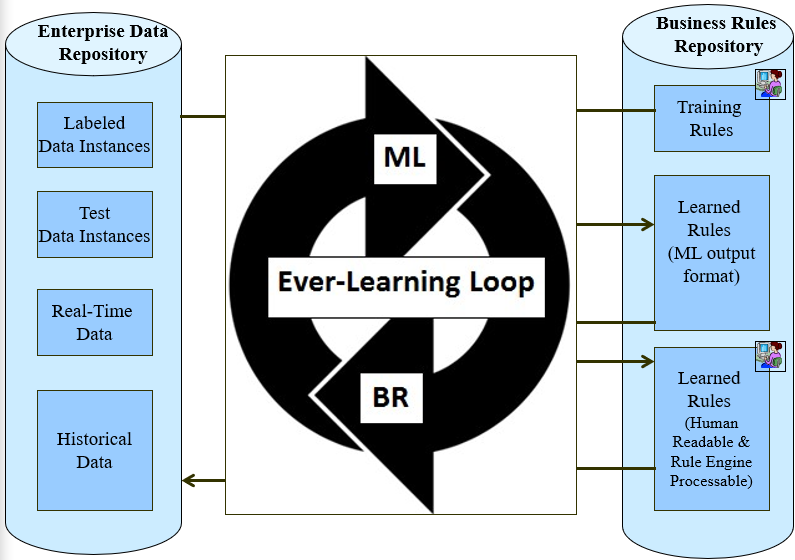 The integrated use of Machine Learning (ML) and Business Rules (BR) is one of the most practical trends in the development of modern decision-making software. OpenRules is involved in this development for more than 10 years starting with our successful ML+BR projects for IRS. Along with a general purpose Rule Learner, we also provide Rule Compressor, that uses ML to compress large decision tables to smaller ones. This recent presentation explains how it works. Continue reading
 OpenRules - Decision Intelligence Platform