Machine Learning (ML) tools have been successfully used for decision-making applications for many years. Despite many success stories, ML popularity in enterprise-level software for years remained incomparable with commonly used Rule Engines or even with Optimization tools. Why? Until recently some application developers considered ML to be “too scientific” or unstable with rarely guaranteed results, others complained that it required too much data for practical applications. Nowadays, when Generative AI dominates most technological news and many populists use the terms “AI” and “ML” almost as synonyms, the situation is changing. Vendors and practitioners, who professionally develop decision intelligence software, see a growing interest in ML tools as enterprise developers want to add AI to their existing decision-making applications.
Continue readingCategory Rule Engines
Integrated Use of Rule Learner and Rule Engine
Nowadays we are experiencing an interesting phenomenon: the more people talk about Generative AI, the more interest we see in the integration of Rule Engines and traditional Machine Learning tools such as http://RuleLearner.com. It is especially important when our customers put these tools into the “Ever-Learning Loop” when the Rule Learner constantly learns new rules from the decisions produced by Rule Engine using previously discovered rules. You may use this simple cloud-based service https://saas.rulelearner.com/ to see how easy to learn rules from historical datasets. You will be able to discover classification rules based on your own labeled datasets without any downloads.
Sanity Checkers for AI-based Decisions
“When it comes to AI, expecting perfection is not only unrealistic, it’s dangerous.
Responsible practitioners of machine learning and AI always make sure
that there’s a plan in place in case the system produces the wrong output.
It’s a must-have AI safety net that checks the output,
filters it, and determines what to do with it.”
Cassie Kozyrkov, Chief Decision Scientist, Google
“When we attempt to automate complex tasks and build complex systems, we should expect imperfect performance. This is true for traditional complex systems and it’s even more painfully true for AI systems,” – wrote Cassie Kozyrkov. “A good reminder for all spheres in life is to expect mistakes whenever a task is difficult, complicated, or taking place at scale. Humans make mistakes and so do machines.”
Like many practitioners who applied different decision intelligence technologies to real-world applications, I can confirm the importance of this statement. I also can share how we dealt with the validation of automatically made decisions in different complex decision-making applications.
Continue readingDecision Modeling: Declarative vs Procedural
The ultimate objective of Business Decision Modeling:
A business analyst (subject matter expert) defines a business problem, and a smart decision engine solves the problem by finding the best possible decision.
Declarative decision modeling assumes that a business user specifies WHAT TO DO and a decision engine figures out HOW TO DO it. This is quite opposite to the Procedural approach frequently used in traditional programming.
Continue readingWhere is Gold?
In this post I describe an OpenRules solution to the puzzle offered as DMCommunity.org June-2021 Challenge:
Continue readingNew Rule Learner for Ever-Learning Decision-Making Systems
OpenRules, Inc. was among first BR vendors who introduced the integrated Machine Learning and Business Rules approach back in 2007. Over the years, our Rule Learner was successfully used to discover business rules by analyzing large sets of historical data in different problem domains. One of the first success came in the large IRS project “The integrated use of BR+ML technologies” – read more.
Today we introduced a new version of Rule Learner publicly available as an open-source product under the terms of the LGPL (it means no restrictions for commercial use!). You can download it for free from RuleLearner.com. It naturally integrates Machine Learning (ML) and Business Rules (BR) techniques by incorporating ML algorithms into rules-based Decision Models. Continue reading
Business Decision Modeling with Rule Engines and CP/LP Solvers
There are two major types of decision engines utilized by different Business Rules and Decision Management systems to execute business decision models:
1. Traditional rule engines (RETE-based or Sequential).
2. Constraint-based rule engines Continue reading
Integrated Use of Rule Engines and Constraint/Linear Solvers
Operational business problems can be defined by a set of decision variables and a set of rules that specify relationships between these variables – see the formal definition. This definition considers a decision as a solution of such a problem, but it doesn’t assume anything about ‘HOW’ how decisions will be produced. It means decisions can be found by applying any rule engine, a DMN engine, a constraint or MIP solver, a custom piece of software written in any programming language, a manually provided expert’s decision, or their various combinations. Continue reading
Raymond Smullyan’s Retro-Analysis and Decision Modeling
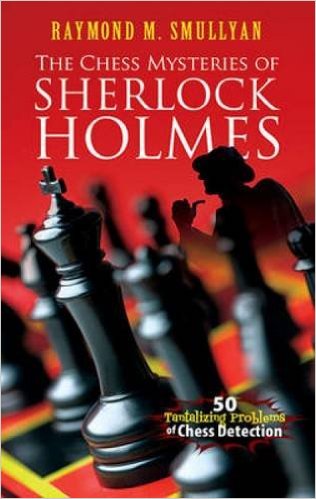
When I learned that the famous Prof. Raymond Smullyan passed away this February at the age of 97, I felt grateful to the man whose books and puzzles my friends and I enjoyed reading as young programmers many years ago. Later on we shared them with our children. I wanted somehow to mark this event and decided to buy his book “The Chess Mysteries of Sherlock Holmes” to read on vacation. Ten days ago I started to read the book during my flight from Newark to Jamaica and… haven’t even noticed as we landed. Continue reading
Automatically Learned Business Rules: Should We Understand Them?
Question: Should we worry that we’re building systems whose increasingly accurate decisions are based on incomprehensible foundations?
I’ve just posted an article with the same name at the LinkedIn Pulse that addresses this question. It is especially important in the context of rules-based decision making when rules that govern our decisions have been automatically generated using predictive analytics techniques. I shared two examples from OpenRules experience that explain why the automatically generated business rules should be comprehensible. The first one talks about the use of our Rule Learner at IRS. The second example deals with our Rule Compressor.
Decision “Determine a Killer of Aunt Agatha”
Could we use decision tables to represent and solve complex logical problems? An example of such problem was offered by the DMCommunity.org in the Nov-2014 Challenge called “Who Killed Agatha“. Continue reading
Resolving Conflicts among Business Rules
Contradictory business rules occur in normal business situations, and maintaining rules with exceptions is a very typical example of rule conflicts. Is it possible to automatically resolve such conflicts? Continue reading
Solving Rule Conflicts – Part 2
“The Sleep of Reason Produces Monsters”, Francisco Goya
Defeasible Logic and Business Rules with Probabilities
Modern rules and decisions management systems provide effective mechanisms for development of good decision models. However, building real-world decision models people always face complex issues related to diagnostic and resolution of rule conflicts. Some systems can effectively verify decision model consistency and diagnose rule conflicts. But there are no practically used Business Rules (BR) products that claim that they may automatically resolve rule conflicts.
In the Part 1 of this series I described how end users can represent their rules in single-hit and multi-hit decision tables while avoiding rule conflicts. But is it possible to automatically resolve rule conflicts? I will discuss this problem below. Continue reading
Solving Rule Conflicts – Part 1
Representing Contradictory Rules with Single-Hit and Multi-Hit Decision Tables
Modern rules and decisions management systems provide effective mechanisms for development of good decision models. However, building real-world decision models people always face complex issues related to diagnostic and resolution of rule conflicts. Some systems can effectively verify decision model consistency and diagnose rule conflicts. But there are no practically used Business Rules products that claim that they may automatically resolve rule conflicts (at least I am not aware of them). As a result, it becomes a responsibility of users to represent rules in such a way that allows them to avoid conflicts. Continue reading
Combining Constraint Solving with Business Rules and Machine Learning – CoCoMiLe 2013
The integration of different decision making techniques finally is finding its home under the roof of the Decision Management movement. I am glad that an integrated Constraint Programming (CP), Business Rules (BR), and Machine Learning (ML) approach is gaining in popularity as well. An interesting workshop “CoCoMiLe 2013 – Continue reading
Fischer vs. Kasparov vs. Karpov
On a long flight back to the US I had a few hours to kill. So, I decided to implement one of my favorite modeling tests that I used to give to my students and they always enjoyed it. This time I wanted to try it myself with the newest OpenRules Decision Modeling facilities (see Rule Solver).
Virtual Chess Tournament
Three world champions Fischer, Kasparov, and Karpov played in a virtual chess tournament. Each player played 7 games against two other opponents. Each player received 2 points for a victory, 1 for a draw, and 0 for a loss. We know that Kasparov, known as the most aggressive player, won the most games. Karpov, known as the best defensive player, lost the least games. And Fischer, of course, won the tournament. Continue reading
Rule Engines: RETE and Alternatives
The famous RETE algorithm was invented by Dr. Charles Forgy more than 30 years ago and it still remains the foundation for most implementations of inferential rule engines. Recently Carole-Ann asked the question: why after all these years there were no practical alternatives to RETE? Continue reading
Modeling Decisions for Scheduling and Resource Allocation Problems
“Reality is built in wonderful simplicity”, Eliyahu Goldratt “The Choice”
Scheduling and Resource Allocation are traditionally considered as very complex business problems. They are usually out of reach for the most rule engines. I personally learned how to deal with these complex problems during my real-world consulting practice by applying a great product called “ILOG Scheduler” written by Claude LePape and Jean-Francois Puget 20 years ago. I’ve just googled the product name and got this User Manual that has over 600 pages with a lot of C++ code. I used to teach ILOG Solver/Scheduler courses and will reuse some examples borrowed from them. Continue reading
Representing and Solving Rule-Based Decision Models with Constraint Solvers
The latest rules conferences RulesFest-2011, BBC-2011, and RuleML-2011 were really great events in general and for OpenRules in particular. We announced a new constraint-based Rule Engine that is the first alternative to Rete-based implementations of a real inferencial rule engine. Continue reading
Forrester about OpenRules
On July 5, 2011 Forrester Research published a report “Market Overview: Business Rules Platforms 2011”. Here is what it says about OpenRules:
“OpenRules have the most-aggressive approaches to business-expert authoring and typically requires less developer support than IBM ILOG, FICO Blaze Advisor, and JBoss BRMS.” Continue reading
About OpenRules Scalability
Being in real-world production environment for many years, OpenRules Engine has a proven record of high efficiency and scalability. Several years ago some of our customers (a major European bank and a large government agency) assigned teams of people to do stress-testing of our product before they decided to use it instead of commercial counter-parts. The results were really good. Continue reading