Discovering Rules From Examples

Watch this short Richard Feynman’s video about Discovering Rules of Chess. He used a chess analogy to explain what we are doing in trying to understand nature: “Imagine that the gods are playing some great game like chess. You don’t know the rules of the game, but you are allowed to look at the board at least from time to time from a little corner, perhaps. And from these observations, you try to figure out what the rules of the game are, what are the rules of pieces moving.”

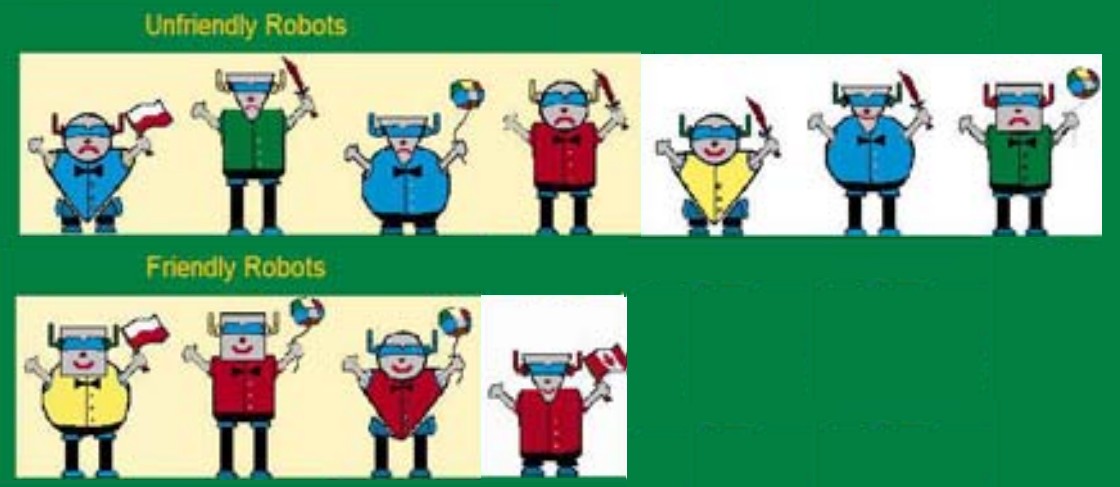
After watching this video, I decided it could be interesting today to refresh several past projects devoted to the Automatic Rules Discovery based on positive and negative examples. I will describe a few projects in which I and/or some of my colleagues were involved.

Continue reading

Decision-Making Systems: Continuing Education

It is interesting to look at the latest Decision Intelligence trends from a 10-year-old perspective when GenAI was not even around. “You don’t program a system, you educate it. Rather than coding into the system, you merely provide a large set of training examples,” – wrote Jean-Francois Puget at that time. Reread my 2015’s post “Don’t Program a System, Educate It!

Integrating Rule Engine and Constraint Solver

OpenRules Rule Solver is an open-source tool that adds the power of Constraint and Linear Programming to Business Decision Modeling. It extends OpenRules Decision Manager to support Declarative Decision Modeling and Decision Optimization.

You may look at multiple decision models from Simple Arithmetic Problems to Smart Investments to see how Rule Solver helps define business optimization problems and produce their optimal solutions. One such decision model was created by our intern to ponder the DMCommunlity Challenge “Rental Boats“.

Continue reading

Machine Learning inside Decision-Making Applications: Practical Use Cases

Machine Learning (ML) tools have been successfully used for decision-making applications for many years. Despite many success stories, ML popularity in enterprise-level software for years remained incomparable with commonly used Rule Engines or even with Optimization tools. Why? Until recently some application developers considered ML to be “too scientific” or unstable with rarely guaranteed results, others complained that it required too much data for practical applications. Nowadays, when Generative AI dominates most technological news and many populists use the terms “AI” and “ML” almost as synonyms, the situation is changing. Vendors and practitioners, who professionally develop decision intelligence software, see a growing interest in ML tools as enterprise developers want to add AI to their existing decision-making applications.

Continue reading

Integrated Use of Rule Learner and Rule Engine

Nowadays we are experiencing an interesting phenomenon: the more people talk about Generative AI, the more interest we see in the integration of Rule Engines and traditional Machine Learning tools such as http://RuleLearner.com. It is especially important when our customers put these tools into the “Ever-Learning Loop” when the Rule Learner constantly learns new rules from the decisions produced by Rule Engine using previously discovered rules. You may use this simple cloud-based service https://saas.rulelearner.com/ to see how easy to learn rules from historical datasets. You will be able to discover classification rules based on your own labeled datasets without any downloads.

Sanity Checkers for AI-based Decisions

“When it comes to AI, expecting perfection is not only unrealistic, it’s dangerous.
Responsible practitioners of machine learning and  AI always make sure
that there’s a plan in place in case the system produces the wrong output.
It’s a must-have AI safety net that checks the output,
filters it, and determines what to do with it.”
Cassie Kozyrkov, Chief Decision Scientist, Google

“When we attempt to automate complex tasks and build complex systems, we should expect imperfect performance. This is true for traditional complex systems and it’s even more painfully true for AI systems,” – wrote Cassie Kozyrkov. “A good reminder for all spheres in life is to expect mistakes whenever a task is difficult, complicated, or taking place at scale. Humans make mistakes and so do machines.” 

Like many practitioners who applied different decision intelligence technologies to real-world applications, I can confirm the importance of this statement. I also can share how we dealt with the validation of automatically made decisions in different complex decision-making applications.

Continue reading

New Rule Learner for Ever-Learning Decision-Making Systems

OpenRules, Inc. was among first BR vendors who introduced the integrated Machine Learning and Business Rules approach back in 2007.  Over the years, our Rule Learner was successfully used to discover business rules by analyzing large sets of historical data in different problem domains. One of the first success came in the large IRS project “The integrated use of BR+ML technologies” – read more.

Today we introduced a new version of Rule Learner publicly available as an open-source product under the terms of the LGPL (it means no restrictions for commercial use!). You can download it for free from RuleLearner.com. It naturally integrates Machine Learning (ML) and Business Rules (BR) techniques by incorporating ML algorithms into rules-based Decision Models. Continue reading